Toddler Language Development in Dubai: How Nursery and Home Work Together
The first time a toddler says "more", "bye-bye" or a name that sounds a little like "Mama" is a moment parents never forget. Between their first and fifth birthdays, children go from a handful of words to telling full stories. In a city like Dubai, many of them do it in two or three languages at once. This guide looks at toddler language development: what to expect, how a good nursery supports it, simple activities for home and when to ask for advice.
What does toddler language development look like?
Toddler language development is the gradual growth of listening, understanding and speaking skills between roughly one and three years. Every child moves at their own pace, but most follow a similar path: understanding comes first, single words follow, and short sentences appear as vocabulary grows.
As a broad guide, many children:
- Around 12 months, respond to their name and say a first word or two
- Around 18 months, use a small set of words and point to show what they want
- Around 2 years, start putting two words together, such as "more milk" or "daddy gone"
- Around 3 years, use short sentences and can be understood by familiar adults most of the time
These are rough markers, not deadlines. Children who hear more than one language may mix words or take a little longer to show their full vocabulary in each one, which is normal.
How does the EYFS support communication and language?
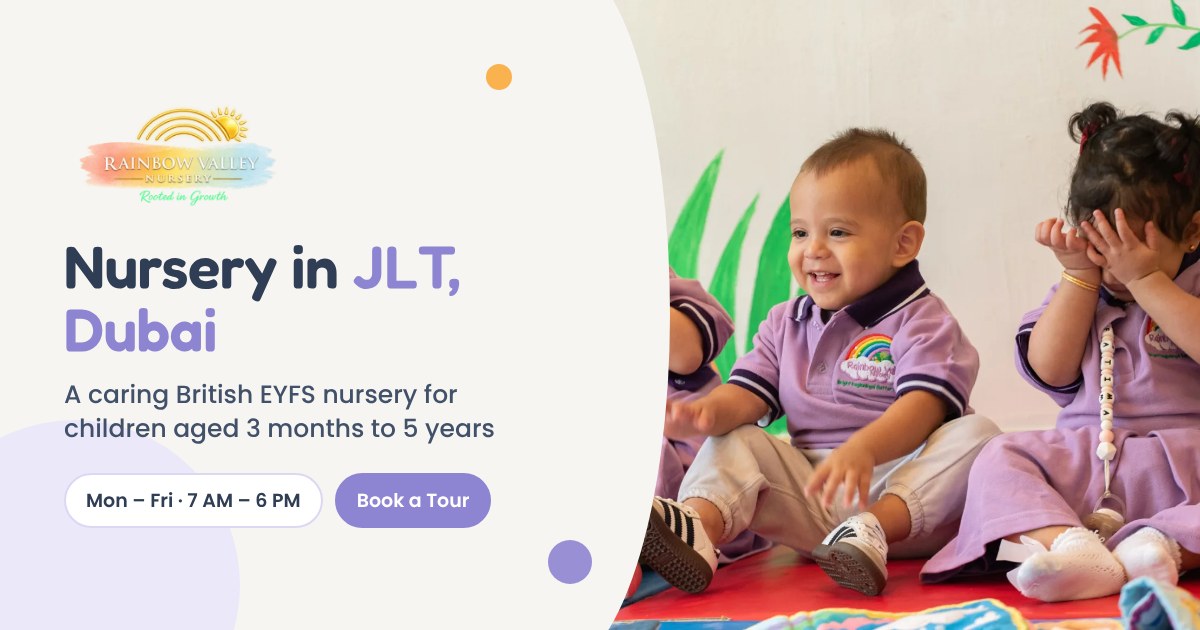
Rainbow Valley Nursery in JLT follows the Early Years Foundation Stage (EYFS) framework, for children from 3 months to 5 years. Communication and Language is one of the three prime areas that children develop first, alongside Physical Development and Personal, Social and Emotional Development. Within it, the nursery's EYFS curriculum focuses on three skills:
- Listening and attention: enjoying stories, songs and rhymes, and following what others say
- Understanding: following simple instructions and answering questions
- Speaking: using words and sentences to share ideas, needs and feelings
Because the EYFS is play-based, language is built into everything: describing what a child is building, naming animals on a park walk, singing during tidy-up time and talking through feelings when friends disagree.
What happens at nursery that helps children talk?
Children learn language best through real conversations with responsive adults and other children. In a nursery day, that happens again and again:
- Circle time with stories, rhymes and songs
- Small group activities where children take turns to speak and listen
- Pretend play, such as a shop or kitchen, that gives children new words to use
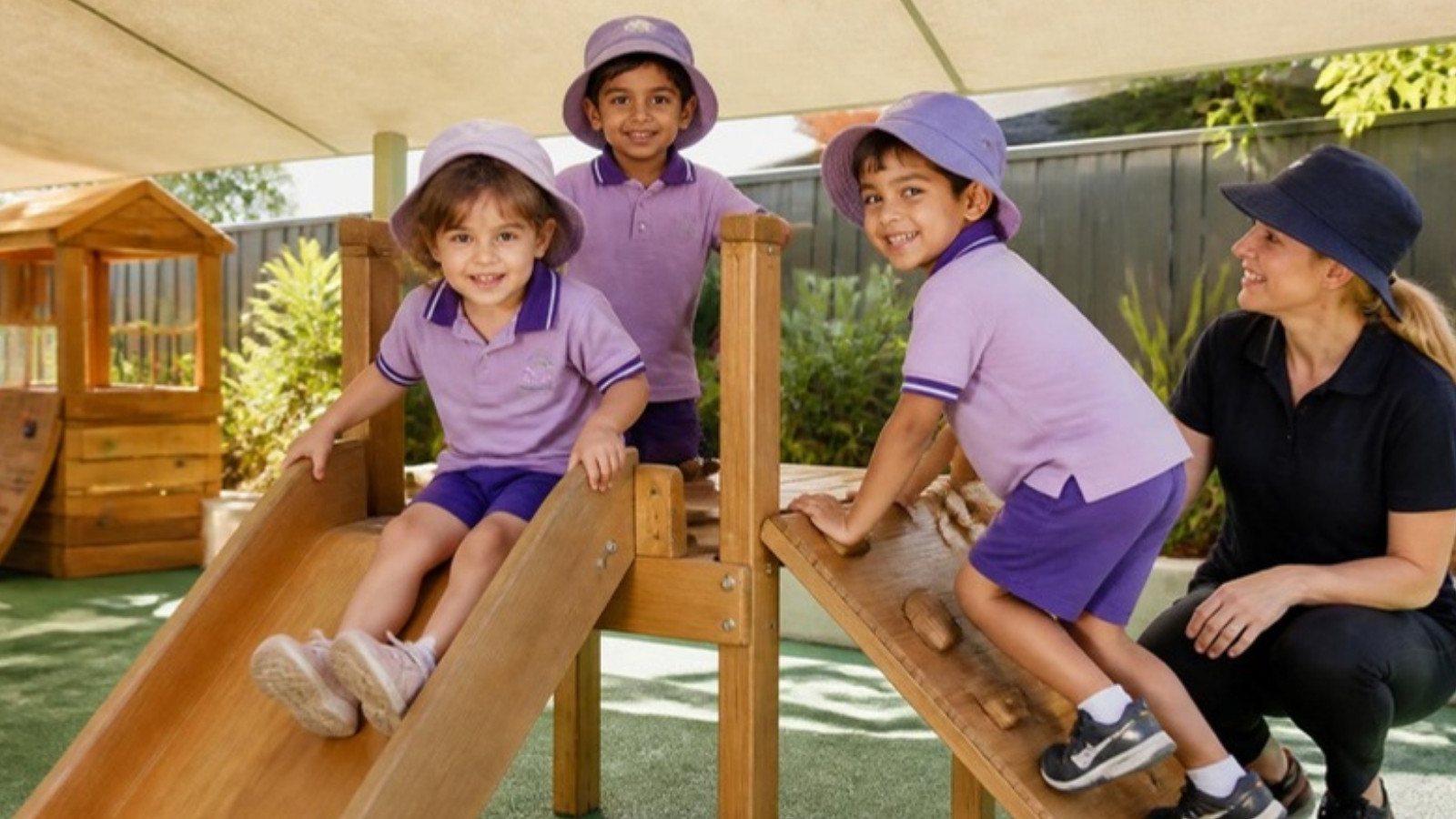
- Outings in the pedestrian-friendly JLT area and trips to places such as the Dubai Aquarium, which spark new vocabulary
- Gentle guidance when conflicts happen, so children learn to use words instead of actions
Rainbow Valley uses technology sparingly and only in age-appropriate ways, so most learning happens through hands-on play and conversation.
Simple ways to support language at home
You do not need special toys or flashcards. The most effective support is everyday talk:
- Narrate your day. "We are putting on your blue shoes. One shoe, two shoes."
- Follow their lead. Talk about what your child is looking at or playing with.
- Add one word. If your child says "car", reply "big car" or "red car".
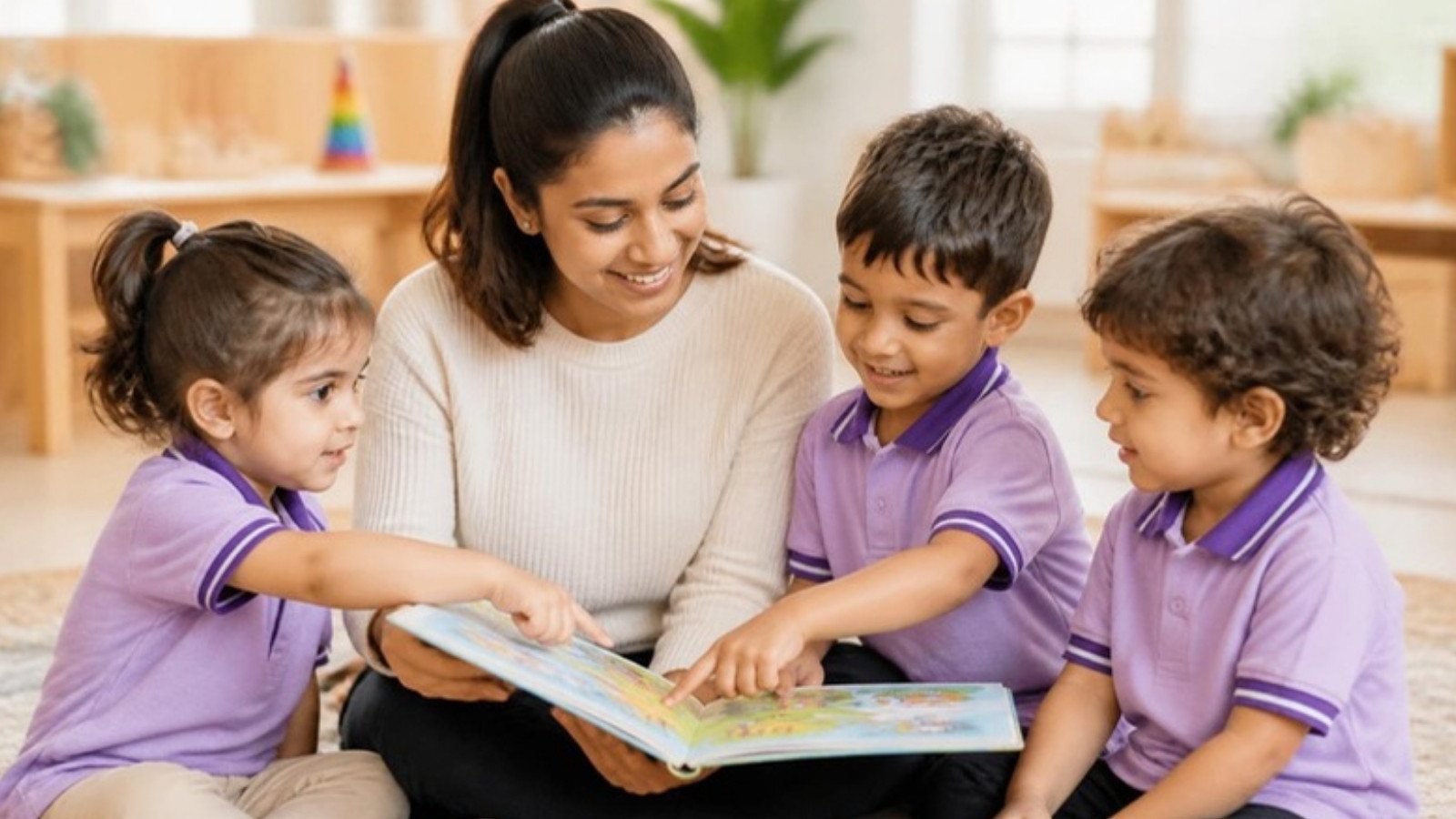
- Read together every day, pointing at pictures and asking "What's that?"
- Sing songs and rhymes, which help children hear the rhythm of language.
- Give time to answer. Pause and wait a few seconds before filling the silence.
- Limit screens. The World Health Organization recommends no screen time at age 1 and no more than one hour a day for 2 to 4 year olds, according to PAHO's summary of the WHO guidelines.
Raising a bilingual child in Dubai
Many Dubai families speak one language at home and another at nursery. That is a strength, not a problem. Children are very capable of learning more than one language, and a strong home language actually supports learning English. Keep speaking the language you are most comfortable in, read books in both languages if you can, and let the nursery team know which languages your child hears so they can recognise words and support them.
When should you ask for advice?
Most differences in timing are normal, but it is always better to ask early than to wait. Speak to your child's key worker or your doctor if your child:
- Does not respond to sounds or their name
- Has no words by around 18 months
- Is not combining two words by around 2 and a half years
- Seems to lose words or skills they had before
- Is very hard to understand by around age 3
Early support makes a real difference, and many concerns turn out to be simple to address, such as a hearing check.
How Rainbow Valley keeps parents involved
Parents receive daily updates with photos and videos through the nursery's parent app and can book a meeting at any time to talk about progress. Events such as open days, concerts and parent workshops give families more chances to see how children are learning. If you would like to see the classrooms for yourself, you can book a tour.
Frequently asked questions
Is it normal for a bilingual toddler to talk later?
Bilingual toddlers sometimes seem to have fewer words in each language at first, but their total vocabulary across both languages is usually similar to other children. If you have concerns, speak to your child's key worker or doctor.
What ages does Rainbow Valley Nursery accept?
Rainbow Valley Nursery welcomes children from 3 months to 5 years old, with programmes tailored to the developmental needs of each age group, following the EYFS framework.
How can I tell how my child is progressing?
The nursery shares daily updates, photos and videos through its parent app, and parents can schedule meetings with the team at any time to discuss their child's development.
Key takeaways
- Toddler language development moves from understanding to single words to short sentences.
- Communication and Language is one of the three EYFS prime areas.
- Everyday talk, reading and singing at home matter more than special toys.
- Speaking your home language supports, rather than delays, English.
Want to see how Rainbow Valley Nursery supports early language? Call +971 4 423 2540, WhatsApp +971 52 599 1917 or book a tour of our JLT nursery.