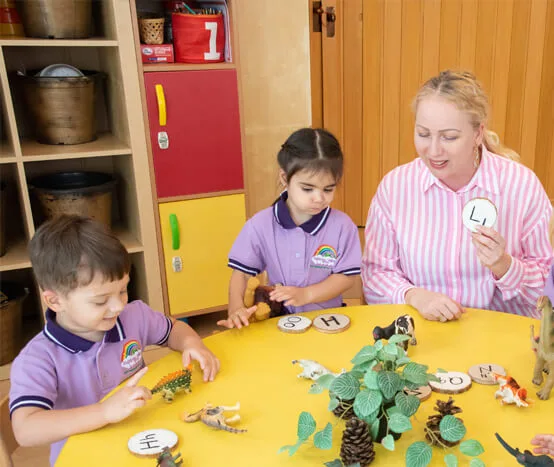

The First Two Weeks at Nursery: How Settling-In Works in Dubai
Settling in at nursery usually takes about two weeks, starting with short visits alongside a parent and building up to full days. Tears at drop-off are normal and usually ease as your child builds a bond with their key adults. A short, calm goodbye and a consistent routine help most children settle faster.
What settling-in is actually for
Settling-in is not about getting a child used to a building. It is about building a relationship with the adults who will look after them. Children feel safe to play, eat and sleep somewhere new once they trust at least one person there. Everything about a good settling-in plan is designed to build that trust gradually.
That is why most nurseries in Dubai, including those following the EYFS framework, stage the first weeks rather than starting with a full day. A child who is rushed may still go in without tears, but often struggles a week or two later when the novelty wears off.
How the first two weeks usually run
Every nursery does it slightly differently, and every child moves at their own pace. A common pattern looks something like this:
- Days one and two: together. You stay in the room for an hour or so. Your child explores while you sit nearby. Staff watch how your child plays and how you comfort them.
- Around day three: a short goodbye. You leave for a short time, perhaps thirty minutes, then come back. The point is to show your child that you always return.
- Days five to seven: longer stays. Your child stays for a morning, including a snack and some outdoor time.
- Week two: building to normal hours. Lunch and nap time are added, then the full day.
Some children are ready for full days within a week. Others take three or four. Neither says anything bad about your child or your parenting. Ask the nursery how they plan settling-in and how they decide when to move to the next step.
Plan it around Dubai life
Timing makes a difference. Many families start nursery in September, after a long summer away, when children have been with family for weeks and routines have slipped. If that is you, start the bedtime and wake-up routine at home a week before nursery begins, so the early starts are not a shock.
If you can, avoid starting nursery the same week you go back to work, move flat or have a new baby. One big change at a time is easier for a small child. Leave a little slack in your diary for the first fortnight too. Being able to collect early on a hard day helps.
Making drop-off easier
Drop-off is the hardest part for most families. A few things genuinely help:
- Keep the goodbye short. A hug, a clear "I am going to work, I will pick you up after lunch," and then leave. Lingering makes it harder.
- Never sneak out. It can feel kinder, but a child who turns around and finds you gone often becomes more anxious the next day.
- Use the same routine every day. Same door, same words, same wave at the window if your nursery allows it. Predictability is reassuring.
- Hand over to a named adult. Passing your child to their key person, rather than leaving them in a room, helps them attach to someone.
- Stay calm yourself. Children read your face. If you are anxious, try not to show it at the door, even if you cry in the car afterwards. Many parents do.
Tell your child when you will be back in terms they understand: after lunch, after nap, after outdoor play. Toddlers do not understand clock time, but they understand the order of the day.
Separation anxiety is normal
Tears at drop-off are common, especially for children between about one and three, and for children who have not been away from a parent before. The crying usually stops soon after you leave. Ask staff to message you once your child has settled, and most will be happy to.
It is also common for a child to go in happily for the first few days, then start protesting in the second week. This often happens once they realise nursery is a regular thing rather than a one-off. It usually passes with consistency.
One thing parents commonly get wrong: changing the plan after a tough morning. Skipping a day or switching the drop-off parent can reset progress. If you are worried, talk to the staff first.
Signs your child is settling
Settling is gradual, and the signs are often small. Look out for:
- shorter or quieter crying at drop-off
- mentioning a teacher or another child by name at home
- eating and napping at nursery
- being keen to show you something they made or did
- playing happily when you arrive to collect them
Tiredness, clinginess at home and a few grumpy evenings in the first weeks are also normal. Nursery is busy, and a lot of new things are being taken in. An earlier bedtime for a while often helps.
If after several weeks your child is still very distressed every day, not eating or not sleeping at nursery, ask for a chat with the staff. A change of approach, such as a shorter day for a little longer, can help.
Settling in at Rainbow Valley Nursery
Rainbow Valley Nursery in Cluster Q, JLT, cares for children from 3 months to 5 years, Monday to Friday, 7:00 AM to 6:00 PM. Its Reggio Emilia inspired approach follows children's interests, which often helps new children find something they want to explore from the first day. You can read about this on the curriculum page or find out more about the nursery in JLT.
The best way to prepare is to visit together before the first day, so the rooms and faces are not completely new. Book a tour, or get in touch on +971 4 423 2540, WhatsApp +971 52 599 1917 or info@rainbowvalleynursery.com to ask about settling-in for your child.
Further reading: UNICEF: early childhood development
Frequently asked questions
How long does it take a child to settle in at nursery?
Around two weeks is common, but some children settle in a few days and others take a month or more. Age, temperament and previous time away from parents all play a part. A gradual start usually helps.
Is it normal for my child to cry at nursery drop-off?
Yes, especially in the first weeks and for children aged about one to three. The crying usually stops soon after the parent leaves. Ask staff to message you once your child has calmed down.
Should I stay longer if my child is upset at drop-off?
Usually not. A warm but short goodbye, followed by leaving as promised, helps children learn that you always come back. Long goodbyes often make separation harder.
Why has my child started crying after a good first week?
This is very common. Many children go in happily at first, then protest once they realise nursery is a regular routine. Keeping the same routine and staying consistent usually helps it pass.
When should I worry that my child is not settling?
If your child is still very distressed every day after several weeks, or is not eating or sleeping at nursery, talk to the staff. They can share what they see during the day and adjust the approach with you.